


The 4th Stage Of Body Awareness - Laterality
- Melanie Durand, Kinderkineticist

- Apr 14, 2022
- 7 min read
Updated: Jun 14, 2022
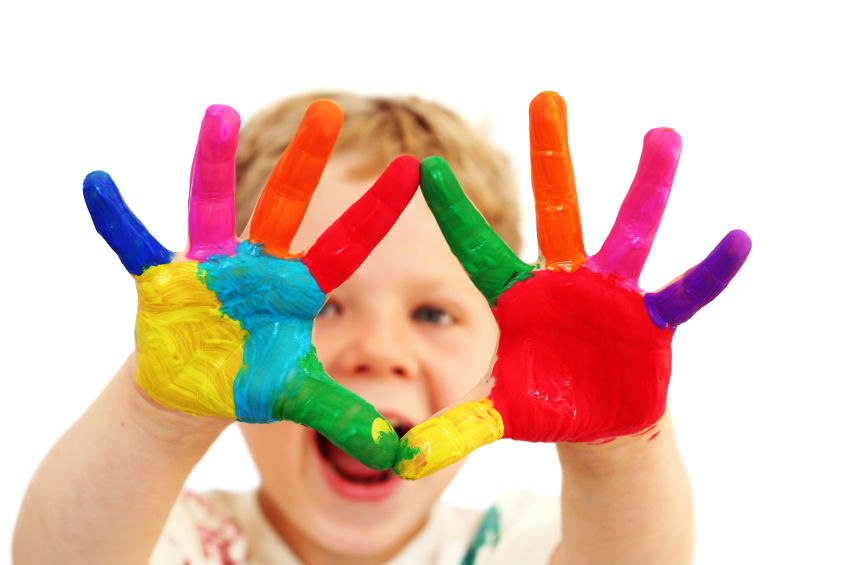
Have you ever wondered why some people will open a bottle with their right hand and hold a fork in their left hand while eating? Or perhaps you have read in a school report certain terms such as mixed dominance, ambidextrous or "he is writing with his right hand, but that he uses more information from his left eye"? Well, this all has to do with laterality and lateral preference!
Your body is divided into two parts (a left side and a right side) via an invisible "line" called the midline. The midline and the crossing thereof, is a very broad topic on its own and will be discussed in one of our upcoming blogs. For today's purpose, however, we are going to start focusing on laterality (and a little bit of lateral preference) as the 4th building block of body awareness.
You will learn what laterality is, why it is super important for future scholastic and sport success, and what you can do to help a child establish a strong sense of laterality. We are also going to start exploring lateral preference and how this differs from laterality. Let's jump right in!
Laterality
Laterality is the internal awareness that there are two sides of the body (left and right), and that these two sides are different from one another.
Professionals in the paediatric field all agree that the development of laterality is very important for school. It is a major step in the development of children's awareness that they have both a right and a left side, and this plays a critical role in their future academic success when they start with Grade 1.
Remember our previous blogs about body concept and body schema? Well, the development of laterality all depends on the information gained from the body during these stages of development.
Typical Laterality Development in Children
At first, children do not have any idea of left and right. They just "feel" that their body has two sides. Then laterality starts to appear at about 4 years of age. Children at this age realize that left and right are on the opposite sides of the body, but they are still unsure of which is which.
Between 5 and 6 years, children start to recognize right and left more easily. Just before attending a formal school setup, children between 6 and 7 years of age should be able to correctly identify the left and right parts of their bodies consistently otherwise they will have a learning disadvantage.
Why may they have a disadvantage, you may ask? Because Western concepts of reading and writing all rely on left and right, and thus it may be difficult for children who have not yet developed laterality. Many academic and physical education instructions also use the term left and right, which can add more stress if a child does not understand this concept by the time that he begins with formal schooling.
Activities To Enhance Laterality

In order to help a child develop a strong sense of laterality, have a look at our previous blogs regarding body concept and body schema. In each blog, we have given ample activities that will ultimately help to promote laterality.
But the long and the short of it is: play games, move and REPEAT! Children learn through movement and need to be encouraged to feel that there are two sides to their tiny shaped bodies. Let them physically feel what it is to be on top of a chair, under the chair, lying on their left side and then on their right side.
Baby massaging is an amazing way to give your baby’s brain a map of where his body starts and ends, with all its curves and twirls. Older children benefit just as much from this type of activity. You can go ahead to do the following activity for older children:
Lateral Massage
Let the child stand upright and in front of you. Now ask the child to first hold out one of his arms at a 90-degree angle to the side of his body. Once he has raised his arm, you can ask him if he knows which side he has raised.
If he does not know, you can name the side of the arm that he has raised. Then go ahead and tell the child that you both are going to teach his brain how that specific side "feels" so that the brain can remember it more easily the next time.
Start off by firmly tracing the child's body from head to toe on the side of the arm that he has raised. Trace the outline of his head, ear, neck and shoulder on that side. Then continue to trace the child's arm at the top and bottom as you move down to the child's side to trace his leg. (The child should hold his arm as stiff as possible when you trace it).
When you reach his foot, hold it tight for 10 seconds. Repeat this whole process three times on the same side before you start the process again on the other side. Name the child's body parts as you trace it. "Now we trace your right ear, your right shoulder, then your arm....". Older children can do this activity with their friends. To make it more difficult, primary school children can do this activity with their eyes closed.
Other Games
In addition to playing games and doing massage, here are some activities (as provided by Cheatum and Hammond) that can be done to increase laterality. These activities will help children use their right and left sides independently, also creating internal awareness of left and right.

Toss And Catch The Magic Scarves (4 years and older)
Take two lightweight scarves or handkerchiefs and give them to each child. Have them stand on either a carpet or inside a hoola-hoop. They must toss the scarves up with both hands simultaneously in front of themselves. Now try and catch one or both scarves in one hand.
Balance and scribble (4 years and older)
Put a large piece of paper on the wall at a height that the child can easily reach. Either give them a pencil or crayons. The child needs to stand on one leg, using his non-dominant hand to push against the wall for support and holding the pencil/crayon with his dominant hand. Now they need to doodle large pictures on the paper, using big movements.
Other fun-filled activities to promote the development of laterality in little ones include:
popping bubbles first with the one hand and then with the other hand,
walking with one barefoot on bubble wrap, then swopping around to walk with the other bare foot on it,
looking through a magnifying glass by first using the left eye, then using the right eye (go outside and ask the children to find different things in the garden),
listening to all the birds and sounds (whilst you are outside) - then trying to find from which direction the sound is coming, and which ear is turned towards that sound.

Here are additional tips and activities from LLA Therapy that you can do with older kiddos:
Play the game Twister
Sing and dance to a song like Hokey Pokey
Play the Left/Right Game: have your child hold two plastic cups (1 in each hand). Sit across the table from him and then roll a marble towards him, calling out which cup they need to catch the marble in as it rolls off the table (Left cup or Right cup). This is a great activity to help learn more about left and right whilst promoting hand-eye coordination and visual tracking.
Teach your child to put his hands out in front of him, palms facing down, with fingers together and thumb out. The left index finger and thumb will make the letter L. This might help them remember that the left-hand makes the letter L (index finger making the vertical part of the L and the thumb making the horizontal part of the L).
Now that you know that laterality involves the left and right side of our bodies, and what you can do to help promote the different sides, what does lateral preference mean and how does it differ from laterality?
Laterality preference
Lateral preference (or better known as dominancy) is a term used when a child favors one eye, ear, hand or foot - on either the left or the right side of his body - more than the other side.
In short, does the child prefer their right hand or left hand to complete tasks? Which foot does he use to kick or balance on? Which eye is he using when he shoots towards a target? Which ear does he prefer when he listens to a message on your phone? A child who has developed a strong lateral preference or dominance, will have a different "feeling" in the side of the body that he favors.
It is known that 90% of the world's population is right-handed. About 10 percent of the population is left-handed and a very small number of people are mixed-handed (or ambidextrous).
Some parents start to shriek whenever they realize that their child is left-handed. They may wonder how to go about teaching their young child left-hand skills involving writing, using scissors or sitting at a desk where the elbows of 2 friends may bump into one another.
But do not fear mom and dad…for your child will shake lefties with famous people like Bill Gates, Oprah Winfrey, and Barack Obama (just naming a few who is left-handed).
More Amazing Information Coming Your Way!
In our next blog, you will learn more about dominancy and the brain, how typical children develop hand dominance and which factors can have an influence on it. You will also learn how to screen and assess children to determine their favorite hand, foot, eye or ear like a pro.
Last but not least, we will cover why it is important to develop a dominant hand, what happens when a child continues to swop their hands and what you can do to help a child use his favorite hand. Until next time, happy moving movements from all of us at Kwanda Kinetics!