


The Smartest Move For Your School
- Marene Jooste
- May 19
- 12 min read
Updated: May 21
Your classrooms could feel completely different — and it starts with movement


If you've been teaching for any length of time, you already know something is shifting.
The children arriving in your classrooms are different to the children who arrived 5 years ago. More of them struggle to sit still. More of them tire quickly, lose focus within minutes, or fall apart emotionally over things that wouldn't have caused a meltdown a few years back.
More of them seem to have weaker bodies - slumping in their chairs, avoiding physical play, lacking the core strength to sit upright through a morning of activities.
You're not imagining it. And it's not a discipline problem.
What you're seeing in your classroom every day is the result of a generation of children who simply aren't getting enough of the one thing their developing brains and bodies are designed for: movement.
The good news - and this is the part that genuinely excites us - is that this is one of the most changeable things about a child's development. And you, as a teacher or principal, are in one of the most powerful positions to change it.
Not by overhauling your timetable or adding another specialist program to an already full plate. But by understanding what movement actually does for a developing child, and making intentional space for it in the rhythm of every school day.
That's what this page is for.
What Movement Actually Does For A Child's Brain

When a child runs, jumps, rolls, climbs, or balances, their brain releases a protein called BDNF - which neuroscientist John Ratey has described as Miracle-Gro for the brain.
It builds the neural connections that support memory, learning, attention, and emotional regulation. A child who has moved before sitting down to learn is neurologically more prepared to absorb, retain, and apply new information than one who hasn't.
This isn't a wellness philosophy. It is neuroscience. And it has direct, practical implications for everything that happens in your classroom.
Research has shown that movement influences brain development from before birth — the connection between physical activity and cognitive growth is not something that kicks in at school age.
It is foundational, and the early childhood years are the most critical window for building it. What happens in your preschool classrooms during these years has consequences that extend far beyond the time children spend with you.
A child who receives adequate, intentional movement throughout their preschool years arrives at Grade R with better focus, stronger emotional regulation, more developed body awareness, and greater confidence in their own physical abilities.
A child who doesn't, carries those gaps with them - and they show up in ways that make every teacher's job harder.
The Vestibular System — And Why It Explains So Much Of What You See

There is a system in every child's body that we are sure your teachers have heard about, yet understanding it will immediately change how you interpret what you observe in your classrooms every day. It's called the vestibular system, and it lives in the inner ear.
Think of it as the child's internal GPS. It tells the brain where the body is in space, which way is up, how fast they're moving, and whether they're balanced or about to fall. Every time a child swings, rolls, spins, climbs, or even tips their head to one side, the vestibular system is being activated and developed.
But here's what makes it so important for teachers to understand: the vestibular system doesn't only manage balance. It is deeply connected to almost every other area of development you care about.
It connects directly to the eyes - which is why children with an underdeveloped vestibular system often struggle to track across a page, copy from a board, or maintain visual focus during a task. It connects to the muscles and postural system - which is why these children seem floppy, tire quickly during seated work, or constantly slump and fidget.
It connects to attention - which is why some children genuinely cannot regulate their focus until their vestibular system has had sufficient input. And it connects to emotional regulation - which is why rocking, spinning, and swinging are instinctively calming for children who are dysregulated or overwhelmed.
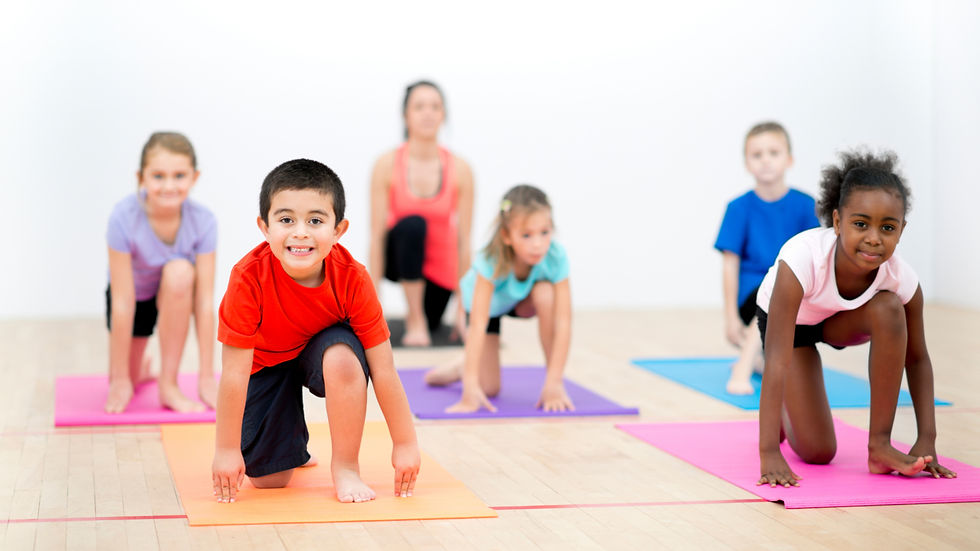
When a child's vestibular system is receiving adequate input and developing well, you see a child who sits upright without effort, coordinates their movements naturally, transitions between activities without falling apart, and maintains age-appropriate focus.
When it isn't - you see the child who can't stay in their seat, who bumps into everything, who melts down at transitions, who avoids the playground, or who swings between craving constant movement and shutting down entirely.
These children are not being naughty. Their nervous systems are communicating a need that isn't being met.
The vestibular system develops through use - through the kind of varied, multi-directional movement that children are designed to do. Swinging, rolling, spinning, crawling, climbing, jumping, balancing on uneven surfaces. The kind of movement that used to happen naturally in outdoor play, and that is increasingly absent from children's daily lives.
The sobering part is that the vestibular system is only a fraction of what shapes a child's development during these early years. We haven't even touched on primitive reflex integration, muscle tone, core strength, the other sensory systems, and so much more — all of which are quietly at work in every child sitting in your classroom right now.
What's Happening Outside School — And Why It Matters Inside Your Classroom

Most children today are spending well over 2 hours a day on screens outside of school hours, and many significantly more. For the vestibular system, this is close to a complete absence of input.
A child on a screen is still, fixed in one position, with their eyes locked at a single distance and their head barely moving. Hour after hour of this, and the system that needs constant varied movement to develop, simply isn't getting it.
The brain is also being affected in a different way. Screens - particularly fast-moving content and interactive games - deliver a level of stimulation that requires no physical effort, no real-world problem-solving, and no social negotiation. The brain calibrates to this input.
When that same child arrives at school and is asked to sit in a circle, listen to a story, wait their turn, and focus on something that doesn't move or flash - the gap between what their brain has been trained to expect and what the classroom is offering is enormous.
This is not a behaviour problem. It is a nervous system regulation problem. And it is arriving at your door every morning.
A child who has spent the previous afternoon running outside, climbing, swinging and playing in unstructured physical ways arrives at school in a fundamentally different neurological state to one who spent that same time on a device. The classroom experience for their teacher is also fundamentally different.
Schools cannot control what happens at home. But schools can create a daily movement culture that actively counteracts the effects of sedentary home environments - and that demonstrates clearly to families why movement at school is not a break from learning, but the foundation of it.
What This Looks Like In Your Classroom Right Now
You don't need a research paper to recognize what insufficient movement looks like. You are seeing it every day:
The child who cannot maintain upright posture by mid-morning
The one who loses focus within minutes of a seated task
The one whose emotional responses are consistently disproportionate - tearful, angry, or shut down over small things
The one who avoids the playground or struggles to participate in physical play.
The one who bumps into furniture, trips over their own feet, or misjudges distance constantly
The one who seems to have very low muscle tone, tires quickly, and lacks the physical confidence of their peers
These challenges rarely exist in isolation. A child with poor core strength breathes more shallowly, which affects self-regulation. A child who avoids physical play misses the social scaffolding that builds cooperation, empathy, and friendship skills.
A child whose vestibular system is underdeveloped struggles with the eye movements required for early literacy. A child who is dysregulated from insufficient movement cannot access the parts of their brain responsible for listening, learning, and responding appropriately to instruction.
When you address movement in your school and create a culture where parents will also value intentional movement at home, you are not just improving physical education outcomes. You are improving everything.
Something That Surprises Most Teachers
Here is something worth knowing because you will see it and recognize it immediately: poor posture in young children directly affects how well they breathe. And how well they breathe directly affects how well they self-regulate emotionally.
A small structure in the neck called the hyoid bone supports the tongue, jaw, and airway. When children habitually slump or carry their head forward - increasingly common after extended screen time - this structure shifts subtly.
This subtle shift causes breathing to become shallower. And a child breathing shallowly is a child whose nervous system is under low-grade stress before the school day has even begun.
This is why building genuine core strength through movement - not fitness, but deep postural stability developed through play and structured physical activity - matters so much in the preschool years.
A physically stable child is a calmer child. And a calmer child is one who can listen, learn, and participate in the life of your classroom.
How Much Movement Do Children Actually Need?
The World Health Organization is clear. Toddlers between 1 and 3 years need at least 3 hours of physical activity spread across the day. Preschoolers between 3 and 5 years need the same, with at least 60 minutes being genuinely energetic play. School-age children need at least 60 minutes of moderate Iow vigorous activity daily, plus muscle-strengthening activity 3 times a week.
A single weekly movement session does not come close to meeting these needs. Movement needs to be woven into the daily rhythm of your school - in structured lessons, in transitions, in outdoor play, in the way the classroom day breathes.
The challenge for most preschools is knowing how to do this in a way that is structured, developmentally appropriate, and practical enough for classroom teachers to implement consistently without specialist training.
If you do not have the option to contract 1 of our in-house Kinderkineticist on your school's premises (this is 1st prize), then we have good news for you. EduMove was exactly designed to fill that gap.
What EduMove Is — And What It Does For Your School

EduMove is a complete neuro-sensory-motor curriculum developed by Kinderkineticists from Kwanda Kinetics, with Masters Degrees and more than 45 years of combined experience working with children.
It was built specifically for preschools - to be implemented by classroom teachers, without requiring specialist knowledge or expensive equipment, and structured to fit inside the reality of a school day.
At its core, EduMove gives your school a research-backed, age-appropriate movement curriculum that addresses everything we've covered on this page - vestibular development, core strength, coordination, balance, sensory integration, and the neurological foundations of learning - in a format that is practical, enjoyable, and immediately usable by your teachers.
Here is what your school gets when joining the EduMove Program:
A complete neuro-sensory-motor curriculum covering different age groups, with 40 weeks of online lesson plans per age group. Every lesson is structured, video-supported, and linked to specific developmental outcomes - so your teachers are never guessing about what to do or why they're doing it.
Screening protocols that allow your teachers to identify which children need additional support, track individual progress, and monitor how the program is working across your school. This gives your school a proactive rather than reactive approach to developmental challenges - catching things early, when intervention makes the biggest difference.
Accredited online courses and educational webinars that build your teachers' knowledge and confidence over time. These are not once-off workshops that get forgotten. They are ongoing professional development resources that your staff can return to, building genuine expertise in childhood movement and development that stays in your school long after any individual teacher has completed the training.
A home stimulation program that you can share with parents throughout the year - 40 lessons that use everyday household equipment to help children continue developing at home during holidays and weekends. This extends the impact of EduMove beyond your school gates and gives families practical tools they can actually use.
Classroom and home resources that make movement joyful and language-rich - connecting physical activity to literacy, creativity, and the social life of your classroom.
Access to a contracted Kinderkineticist who can provide professional consultation and support for individual children or your school as a whole - so you always have a specialist available when you need one, without the cost of a full-time appointment.
EduMove is not an add-on to what your school already does. It is the movement foundation that everything else builds on. Schools that implement movement like this, consistently report children who move better, calmer classrooms, more engaged learners, children who manage transitions and frustration with noticeably greater ease, and teachers who feel confident and equipped rather than overwhelmed.
Here is what some of them have said:
"I have been involved in preschools and teaching children for more than 40 years. Never before have I seen anything remotely similar to your program at all. Where have you been all these years?"
"For years, we had to teach our Grade R children the difference between their right and left hand. Ever since we incorporated your program, this has automatically developed in all our children. By the time they enter Grade R, we no longer need to show, teach or remind them about this concept."
"This is the best possible decision that I could have made for our preschool. The talks are so insightful — we have recommended that all our parents watch it."
Experience It For Yourself — Your Free Resources Are Below
Everything below has been put together so that you can experience EduMove before committing to anything. We believe the best way to understand what this program does is to use it - with your children, in your classroom, in the next week.
Work through it at your own pace. Share it with your teachers. And if you have questions at any point, we are always available to talk.
Start here: Week 1 of the EduMove lesson plans
This is the best place to begin. We've made the first week's lesson plans for the 0 – 6 year curriculum available for you to work through right here on this page. Each lesson is structured, clearly explained, and linked to specific developmental goals. You don't need specialist training to use them — that's the point.
Curriculum Preview
0 - 2 Years Lesson Plans
Curriculum Preview
2 - 6 Years Lesson Plans
Hover and click on each category (e.g. roll)
to see the videos embedded in each lesson plan.
Know which children need more support: screening protocol examples
One of the most valuable things a teacher can have is a clear, structured way to identify which children in their class are developing within normal ranges and which ones need closer attention or professional referral. These screening protocols are a simplified version of what is included in the full EduMove subscription.
We've included one example for babies and toddlers, and one for older preschool children. Use them with your current class and see what you notice. If a child flags consistently across multiple areas, that is useful information - both for you as their teacher and for the conversation you may need to have with their parents.
Screening Preview
0 - 3 Months
Screening Preview
2 - 3 Years
Hover and click on the numbers to see the demonstration videos
For your classroom walls and circle time: music posters
These are ready to use this week. Print them out, put them on your wall, and use them during circle time or movement breaks. The action songs are paired with movement, so children are singing and moving simultaneously - which, as you now know, is exactly the kind of multi-sensory input their developing nervous systems need.
These are a small taste of the music and movement resources included in the full EduMove program.
For story time with a purpose: the EduMove storybook and song
This storybook is designed to be read aloud in class, and the accompanying song ties the story's themes to movement in a way young children respond to naturally and joyfully. It is the kind of resource that turns a quiet story time into a whole-body experience - and children ask to come back to it.
Story Book For Girls
1 - 3 Years
Story Book For Boys
1 - 3 Years
Rhyme Book For Children
3 - 6 Years
Fun Activity Song Related To Rhyme Book

When you're ready to take the next step
If what you've experienced on this page has given you a sense of what EduMove can bring to your school, we'd love to talk. A subscription to EduMove gives your school the complete curriculum, accredited teacher training, screening tools, home stimulation resources, music and classroom materials, and ongoing access to a professional Kinderkineticist.
It is, as one principal told us after forty years in the field, unlike anything they had seen before.
Watch the video below to see EduMove in action.
Take hands with EduMove and help all the children in your school reach their full potential by building a solid foundation for learning and sporting success.
EduMove was developed by Marene and the Kwanda Kinetics team - Kinderkineticists with Masters Degrees and more than 45 years of combined experience working with children from birth through primary school. Everything in this program is grounded in current neuroscience and developmental research, and every lesson, protocol, and resource has been tested and refined in real classrooms with real children. We don't just know the theory. We know what works.